What happens when a design team of 70+ people integrates AI thoughtfully and actually pays attention to the results.
Everyone has an AI story now, and it usually goes one of two ways: either “we tried it and honestly it changed everything” or “we tried it and honestly, it’s a bit overhyped.” Both are true depending on what you were hoping for, which is not a very satisfying conclusion but here we are.
We’ve been through both phases. First came the excitement, then the mild chaos that follows when half the team is experimenting with five different tools at once, and then the specific kind of humbling moment where someone presents an AI-generated strategy that sounds brilliant until you realize it would’ve been equally convincing for any of your client’s competitors. At Sigma Software Design, AI has been part of how we work for long enough that the novelty has fully worn off and what’s left is something more useful: actual observations from a design team of 70+ people who’ve been paying close attention.
We didn’t wait for the industry to settle on best practices. We just started, ran into the expected walls, figured some things out the hard way, adjusted, and kept going. Which means that by now we have enough real experience to have opinions that didn’t come from a webinar.
So this is us sharing some of that. Anastasiia, one of the PMs on our design team, breaks down what’s actually been happening inside the studio: what AI changed, what it didn’t, and what it quietly made worse.
The mapping nobody wants to do
At some point I became the person in our unit who started mapping how AI actually fits into our work, step by step, task by task, and with a lot of input from the team along the way. Their daily frustrations, small wins, and the kind of honest feedback you only get when people trust you enough to say “this didn’t actually help.” While the team was deep in actual projects, I was one level up, trying to understand what those projects are actually made of. That felt like a reasonable sign I’d gone too deep, but the alternative was doing what most teams do: buy everyone access to the same three tools, call it an initiative, and wait for something to change.
The mapping started with a deceptively simple question: what does our team actually do, step by step? Because in a design unit, the real answer is never “make a mockup.” Designers sit at the intersection of business goals and human behavior — they gather requirements, shape product strategy, untangle what users say they need from what they actually do, and figure out how to make all of that coherent before a single frame gets opened. The scope of that work is wider than it looks from the outside:
• UX research and discovery phases
• UI design, branding, motion, video
• workshops and presentations
• business analysis, requirements gathering and product strategy
• documentation and preparing artifacts for development
• client communication
• marketing materials
And a lot of smaller processes that usually stay invisible until you’re trying to map them and suddenly they’re everywhere.
When we started mapping all of this, it became obvious that some part of the team’s day is made up not of creative work but of small routine actions that constantly drain context, energy, and focus. That’s also, it turned out, exactly where AI started earning its place.
Where it actually helps: the connective tissue
The most honest description of what AI changed isn’t “we have better ideas faster.” It’s closer to: the parts of the day that used to feel like wading through sand got shorter. Concretely, this looked like:
• structuring information faster
• getting to a first draft without staring at a blank screen for an hour
• summarizing a meeting into something the team could actually use
• testing a hypothesis before spending a week building the case for it
• moving from an empty page to something discussable
One example: a UX researcher on our team working on a healthcare product normally spent two full days synthesizing a round of user interviews before she could bring anything meaningful to the rest of us. With AI handling the first structural pass, she had a working draft by end of the same day. She still made every judgment call about what the patterns actually meant. The thinking wasn’t outsourced. But the part where you stare at the raw material trying to find a thread, that got significantly shorter.
The distinction between “replaced” and “shortened” matters more than it might seem.
The option overload problem nobody mentions
But speed came with a flip side.
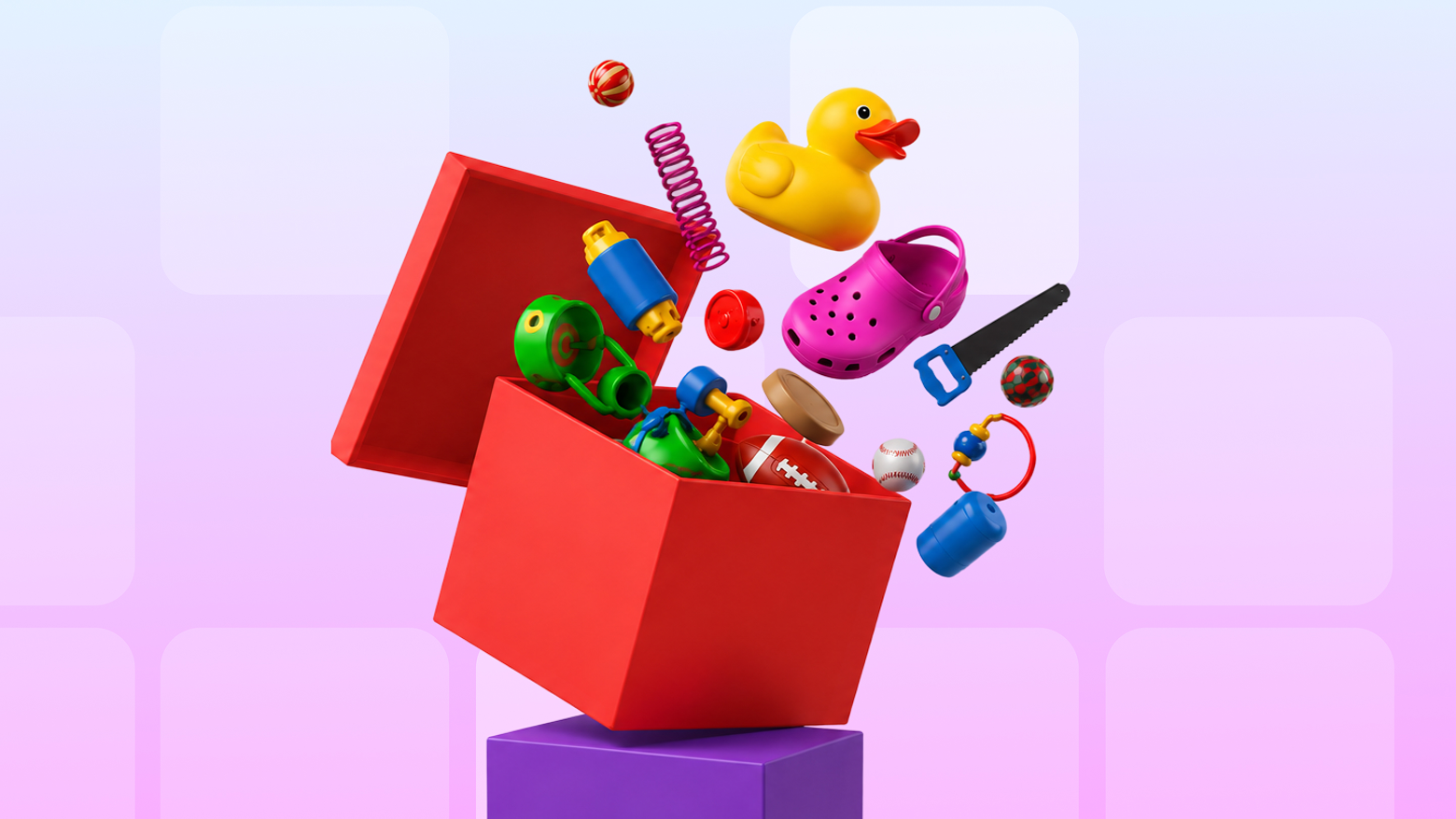
AI is very good at generating options, sometimes even too good. Teams can now produce more ideas, more directions, and more solutions in far less time. Sounds like a dream! In practice it sometimes feels like being handed 47 pizza boxes and going home hungry, not just because you couldn’t choose, but because half the boxes turned out to be empty and a few others had the wrong order inside. Paradoxically, this volume doesn’t always make the work simpler, it often creates a new kind of complexity, where sorting through what’s actually usable gets in the way of making a decision.

We worked on a brand identity for a fintech client with a clear brief and a reasonable timeline. We used AI heavily in ideation and came to the presentation with what felt like genuine thoroughness: multiple naming routes, several visual territories, three distinct narrative angles. The client couldn’t move. Not because nothing resonated, but because the volume of plausible options made every choice feel like it was closing something off. Eventually we stepped back, removed most of what we’d presented, reframed around a single recommended direction, and essentially ran the presentation again.
The thoroughness had worked against the decision.
That pattern showed up enough times to stop feeling like a project-specific failure. A working hypothesis, still unproven but hard to ignore: the faster a team generates options, the more time it spends trying to agree on one. AI compresses one stage of the work and quietly stretches out the next. Getting better at editing before the presentation rather than after is now a real skill we’re actively developing.
Speed without alignment is its own problem
There’s something subtler that took longer to notice, and it might be the most important thing in all of this.
Before AI was this embedded in our workflow, the pace of production created natural pauses. Between stages, people asked each other questions, checked, and confirmed that everyone was working from the same version of the brief. Now things move quickly enough that those pauses just don’t happen organically. There’s no gap where someone thinks to check, because the next thing is already in motion.
A motion project made this concrete: two designers worked in parallel for close to two weeks before a review meeting revealed they’d each interpreted a key direction from the kickoff call differently. Both interpretations were reasonable, neither had been confirmed. AI had helped them move fast, in opposite directions.
This is the gap that gets skipped in the AI productivity conversation: AI is genuinely useful for execution speed. It does almost nothing for shared understanding. And shared understanding is still where the actual decisions happen.
Good decisions still depend on more than just information or generation speed. They depend on:
• context and understanding the business
• knowing the market and competitors
• how consistently people in the team understand the actual problem they’re trying to solve
AI can produce a very convincing answer in seconds. There’s a specific moment where you read a well-structured AI output and think “yes, exactly.” Then you realize the same summary would have applied equally well to three of our client’s competitors. It’s coherent, it sounds like the right diagnosis, and it’s essentially a horoscope. The gap between “this sounds correct” and “this is correct for this specific product” is still entirely a human problem.

What AI actually reveals
Here’s the part where I say something that will feel obvious the moment you read it. Bear with me, because it took us longer to fully absorb than it should have.
AI doesn’t create problems, it accelerates whatever is already there.
Teams with clear ownership, defined decision points, and functioning communication got noticeably more effective. Teams with functional chaos got faster chaos. If a team lacks:
• clear ownership
• defined decision points
• functioning communication
• shared understanding of priorities
AI won’t fix that, it will just speed up the consequences.
We essentially ran a very elaborate experiment to confirm that structure matters. Groundbreaking, we know. But most teams assume their processes are fine until something puts pressure on them. AI put pressure on ours, and some things held up better than others. That’s actually useful information, even if the conclusion sounds like something you’d read on a motivational poster in a co-working space.
Which is probably why the most valuable skill right now isn’t knowing which tools to use. It’s building processes where speed doesn’t quietly destroy clarity. Because if the competitive advantage used to be the ability to move fast, that advantage has mostly flattened now. Almost everyone can move fast. Deciding well together, though that part hasn’t changed at all.